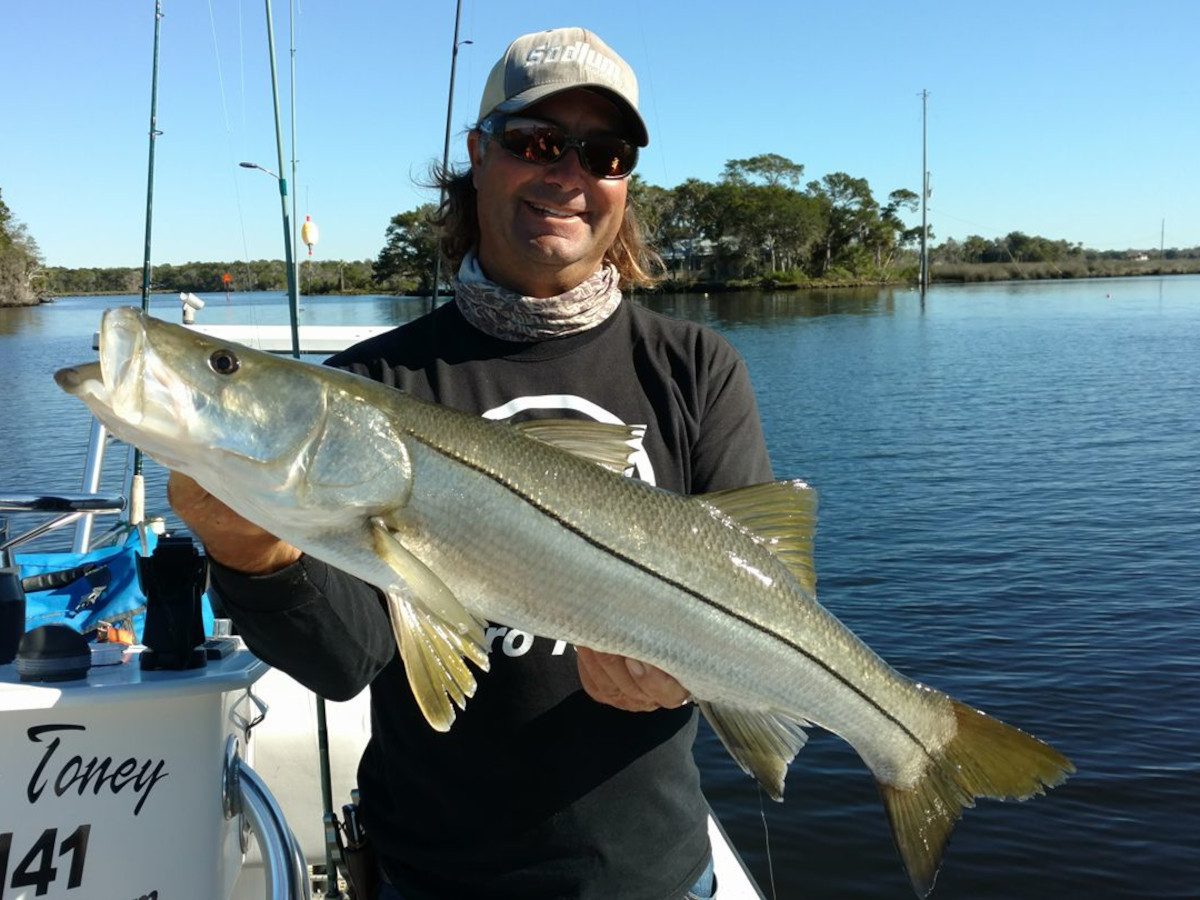
If redfish are the fish you tell everyone about, snook are the fish you are still dreaming about a year later. Sometimes because you caught them. More often because you did not.
Snook are not a forgiving species. They live in tight cover, they cut line on structure before you can adjust, and they will find every prop root and dock piling in a quarter mile of water the moment you hook one. That is also why catching a snook in the Homosassa backcountry on light tackle is as satisfying as inshore fishing gets. The fish earns it.
The quick answer: Snook in Homosassa hold on structure in tidal creeks, around mangrove shorelines, and in the spring-fed rivers throughout the year, sliding deeper into the rivers and spring runs during the coldest fronts. Live shrimp on a jig head around moving water is the most consistent producer in the backcountry for numbers of bites. The outgoing tide concentrates fish at creek mouths and drain points. Snook are highly sensitive to prolonged cold, so in hard winters the best numbers shift into the rivers where temperatures stay stable around seventy-two degrees. Seasonal and size regulations change, so always verify current rules with the Florida Fish and Wildlife Conservation Commission before keeping one, and note that harvesting snook requires both a Florida saltwater fishing license and a snook permit in addition to falling within the current slot and season for this region.
Here is what I know about fishing them on the inshore charters I run out of Homosassa.
What Makes Homosassa Snook Fishing Different
Snook are a warm-water species and they need clean, moving water with access to structure. Homosassa provides all three in abundance.
The spring-fed rivers that feed this estuary run clear and stable year-round. Between the Crystal, Homosassa, and Chassahowitzka river systems, you have miles of spring-fed shoreline, mangrove keys, and tidal creeks within a short run of the dock. The system is lined with mangrove shorelines, tidal creeks, and backcountry cuts that hold snook in every season. The fish do not need to travel far to find what they need, which means they stay close to the same structure for months at a time when pressure is light.
The Chassahowitzka backcountry in particular is as good a piece of snook water as exists on the Nature Coast. The pole line area and the tidal creeks that drain into that system see far less pressure than the water closer to the Homosassa River launch. That matters. Snook in lightly fished backcountry creeks are not nearly as line-shy as fish that see a bait every day. Weekdays and non-holiday windows see the lightest pressure. Weekends and scallop season bring more boats into the main channels, which is another reason I push south when I want quiet water.
What this means for an angler coming to Homosassa is that you have access to large, underpressured snook habitat within a short run of the dock. You are not burning an hour of your trip to get to fish. You are fishing.
Tides and Timing
Best Tide for Snook
Tide is the organizing principle for snook in the backcountry. More than almost any other inshore species, snook are defined by their relationship to moving water and the structure it moves past.
The outgoing tide is my first choice for backcountry snook. As water drains off the flat and empties out of the tidal creeks, snook position themselves at the mouth of those creeks in ambush. Bait washes through on the current and the snook sit downstream of the structure and eat what comes to them. I look for creek mouths that narrow down to a defined drain point where the current accelerates as the tide drops. That constriction is where the fish concentrate.
On the incoming tide, snook push back up into the mangrove shorelines and the inside bends of the creeks. They are hunting along the edge of the root system where bait is moving with the flooding water. I cast tight to the mangroves — within a foot of the roots when I can manage it. A cast that lands three feet off the bank is often three feet too far. If you are newer to casting in tight quarters, work your way closer over a few casts rather than trying to stick a perfect shot at the roots on the first one. You will hang less bait in the trees that way.
Night fishing on an outgoing tide in the river is productive for snook through the warmer months. They stage under lights and around dock structure where bait stacks up in the current. I fish dock lights slow and deliberate, keeping the bait in the light-to-dark transition zone where snook wait. Redfish and seatrout share those same lights, so expect company. A snook bite at a dock light in the river at night is not always a snook until you see it.
Time of Day
Early morning and evening are the most productive times in summer heat. Snook in shallow backcountry water slow down in the middle of the day when temperatures peak. Get on the water before sunrise, fish the first outgoing tide hard, and plan on wrapping up by mid-morning on hot summer days.
In winter, that equation flips. The warmest part of the day in the rivers can fish best, especially when a sunny afternoon bumps the temperature a few degrees in the deeper holes where snook are holding. A slow shrimp presentation in a deep river bend at two in the afternoon on a cold January day can surprise you.
In spring and fall the bite runs longer. Cooler water temperatures keep snook active well into the morning and they will eat through the middle of the day on overcast days or during a good tidal push.
Where I Find Them: Reading the Backcountry
Snook are structure fish. Every piece of cover that provides ambush position in moving water is a potential snook spot. The variable is current. Without moving water, the structure is mostly empty. The same dock piling that holds three snook on an outgoing tide may hold nothing at dead low water.
I look for specific features when I am reading the backcountry.
Creek mouths are the starting point. Any tidal creek that drains onto the flat or into the river will concentrate fish on the falling tide. The narrower the drain and the stronger the current pulling through it, the better.
Mangrove points are productive on the incoming tide. A point that juts out into the main creek or river channel creates a current break on both sides of the structure. Snook sit just inside the calmer water behind the point and feed on whatever washes past the tip.
Fallen trees and dock pilings in the current are worth a cast every time. Snook use cover more for ambush than for comfort. The shade line helps, particularly under docks near mid-day, but the current break and concealment are what matter most. When you are looking at a piece of structure, think about where the current shadow is before you decide where to cast.
Oyster bars at the mouth of creeks are good on the outgoing tide but require careful boat positioning. Cast up-current and let the bait swing through the deeper water at the base of the bar. Do not position the boat over the bar itself. The noise and shadow will push fish off it. If you are running a fiberglass hull and unfamiliar with the bars in a new creek, idle in on a higher tide first so you learn the layout before you learn it with your lower unit.
Approach and Position
Snook spook more readily than redfish, particularly in clear spring-fed water. The approach sets up the whole presentation.
I shut the outboard off before I reach the creek I am going to fish and either pole or use the trolling motor on the lowest setting to get into position. In very shallow or very clear water I prefer the push pole. The low-frequency hum of a trolling motor carries far in tight backcountry quarters.
Position the boat so the current is working for you, not against the presentation. A bait that is fighting the current does not look like anything a snook wants to eat. A bait that drifts naturally with the water looks like something that belongs there. Cast up-current of the structure and let the tide do the delivery.
Leader strength matters in snook fishing because the gill plates will cut line in a fast hookset. I run about twenty-four to thirty-six inches of thirty-pound Seaguar fluorocarbon between the braid and the hook. When a snook runs for structure — and it will run for structure — the fluorocarbon handles contact with dock pilings and mangrove roots better than braid can.
Keep the rod tip up on the hookset and get the fish’s head turned before it reaches the first piece of structure it is heading for. You will not always win that race. But you have to try.
If you plan on releasing your fish, consider crimping your barbs. A snook comes off the hook faster with a crimped barb and a barbless hook does not change the hookup rate the way most people assume. What it does change is how quickly you can get the fish back in the water.
Best Baits for Homosassa Snook
Live Bait
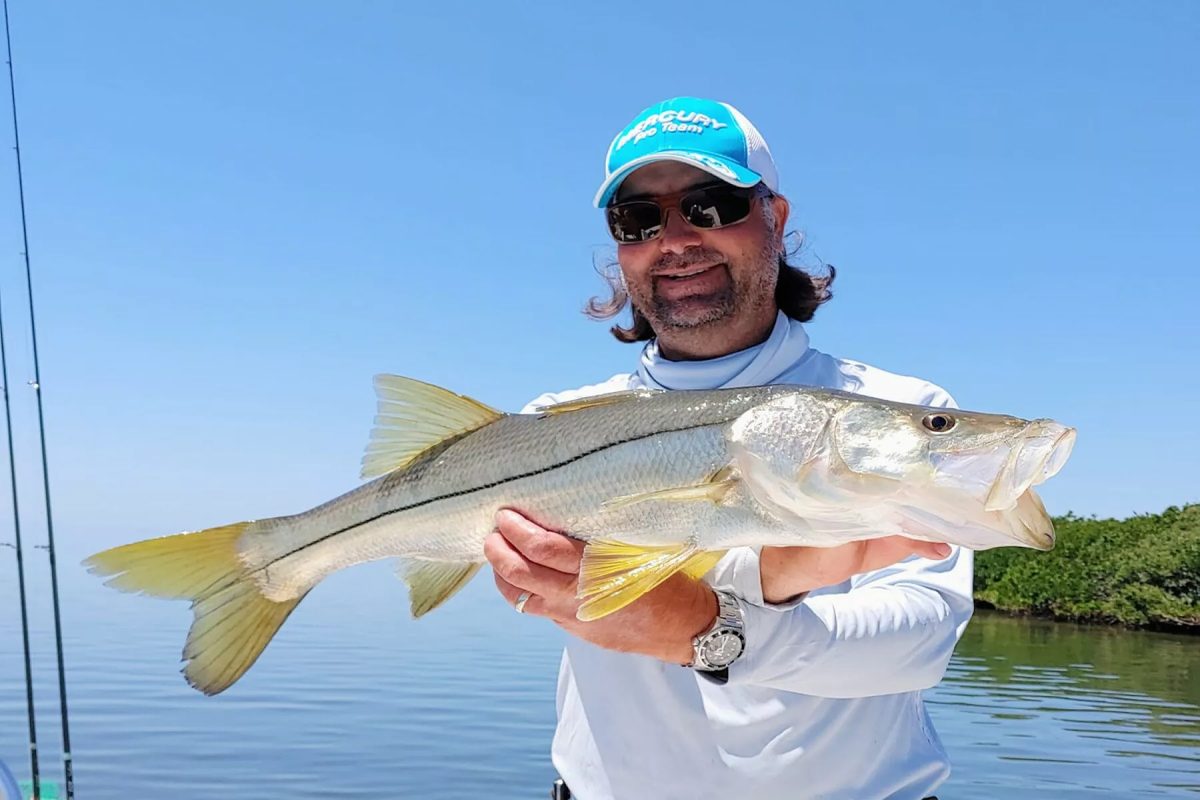
Live shrimp is the best bait for snook in the Homosassa backcountry. When you put a lively shrimp into a creek mouth drain on an outgoing tide and let it wash through naturally, snook eat it. The presentation is simple and the results are reliable.
I catch my bait fresh on the way to the fishing grounds every trip. Fresh bait consistently outfishes weak or stressed bait, and shrimp that has been sitting in a bait well overnight is not performing at its best. A lively shrimp moves and kicks in the current in a way that a slow one cannot replicate.
I rig shrimp on a 1/8 oz. jig head for most backcountry situations. Pinch the tail off and thread the bait tail-first onto the jig head, pushing the shrimp up so it seats into the keepers on the neck. In deeper or faster-moving water I will go to 1/4 oz. to keep the bait near the bottom where snook are holding.
Live pinfish on a free line is my choice around deeper dock structure and nearshore pilings. A pinfish swims on its own without any additional weight and covers the water column naturally. Bigger snook in the river tend to want something with more profile than a shrimp, and a live pinfish delivers that. When small whitebait or scaled sardines are available on the flats, they also make excellent freelined offerings around river docks and points. You will not always find them, but when you do, they are hard to beat.
Artificial Lures
For artificials, I reach for the D.O.A. 5.5 glow jerk bait first. I rig it with a 3/0 bait style hook right through the tip of the nose of the lure. The wide profile displaces water and the slow twitch-and-pause retrieve gives a snook time to locate and commit to the bait. Work it with a slow twitch, let it sink, and be ready for the strike on the drop.
MirrOlure Lil Johns in watermelon red flake on a 1/8 oz. D.O.A. jig head are productive in the creeks and along mangrove shorelines. Dark colors — root beer, motor oil, dark flake patterns — tend to outperform lighter colors in the tannic backcountry water where visibility is reduced.
On calm summer mornings before the sun gets up high, a topwater walk-the-dog presentation along mangrove edges will bring snook up. A Skitter Walk or similar prop-style bait worked slow along a shadowed bank is the kind of visual bite that is hard to forget. It is not my highest-percentage play, but on the right morning it is the right call.
I fish these on a 7’6″ Boner 8 to 15 medium fast rod with 10 lb. Power Pro Braid and a thirty-pound Seaguar fluorocarbon leader. The heavier leader than I use for redfish is not optional for snook around structure. Light leader material around dock pilings and mangrove roots will cost you fish.
Seasonal Patterns
Snook behavior in Homosassa shifts considerably through the year.
In winter, snook move out of the backcountry and concentrate in the deeper sections of the spring-fed rivers and spring heads where water temperatures stay stable. They are still catchable but the presentations slow down significantly. A live shrimp worked very slowly in a deep river hole on a cold January afternoon is the right approach. They are not chasing bait in the winter. After severe cold events that cause fish kills, FWC has historically adjusted seasons or harvest rules on short notice, which is one more reason that FWC link matters year-round and not just when you are planning a trip.
Spring is the transition. As water temperatures climb through March and April, snook begin moving back toward the structure in the tidal creeks and mangrove shorelines. They are feeding more actively each week as the water warms. By April they are in fishable numbers on the backcountry spots I return to every year.
Summer is peak activity in the creeks and around lights at night. Scallop season brings more boat traffic into the main channels and the river, which is another good reason to run south toward the Chassahowitzka when you want undisturbed water. Fish early to beat the heat on the flats. After dark, the river dock lights and bridge structure produce snook on the outgoing tide through July and August.
Fall is a transition back toward wintering areas, but the bite can be very good in September and October before the water cools significantly. The fish are feeding more aggressively before winter and they are less finicky than they are in the warm months. For how snook fit into the wider Nature Coast calendar, see the month-by-month Homosassa fishing guide.
Handling and Release
Snook are a managed species and catch-and-release is the standard most of the time given where the seasons fall. If you are releasing fish, take a little care with the process.
Keep the fish in the water as much as possible. If you want a photograph, have the camera ready before you lift the fish. Support the belly when you pick one up — do not hold it vertically by the jaw alone. Limit the fight time, particularly in summer when water temperatures are high and a long fight stresses the fish more than most people realize.
If you are fishing deeper river holes in winter where snook are staging at depth, do not crank them up fast from fifteen or twenty feet. Give the fish time to adjust, and if it struggles to right itself after the fight, hold it upright in the current until it swims away on its own.
A Note on Regulations
Snook regulations in Florida change based on season, area, and stock assessments. The Gulf coast season is managed separately from the Atlantic side, and the rules have shifted multiple times in recent years, including emergency closures after major cold events. Do not rely on what any website, including this one, says about what is legal to keep.
You will also need both a Florida saltwater fishing license and a snook permit to legally harvest one, in addition to staying inside the current slot and season for this region. Before you keep a snook, check current regulations at myfwc.com. That is the only source I trust on this subject.
Watch Captain Toney on In The Spread
I have produced instructional video content on snook tactics through In The Spread, covering live bait presentations, backcountry approaches, and the techniques I use year-round on this Homosassa and Nature Coast water. Full-length instructional format built for anglers who want to understand the reasoning behind the approach.
Watch Captain Toney’s videos on InTheSpread.com
Ready to Fish the Homosassa Backcountry for Snook?
Snook are in the creeks and on the mangrove shorelines throughout the year. The spring and fall windows are particularly strong, and summer night fishing in the river is as reliable a pattern as I run. Whether you are new to casting tight to mangroves or already comfortable in the backcountry, we will match the day to your skill level and what the conditions are doing.
Give me a call if you want to talk through timing.
Captain William Toney
Homosassa Inshore Fishing
Call 352-422-4141 to Book Your Charter